The Most Visited Museums in Greece
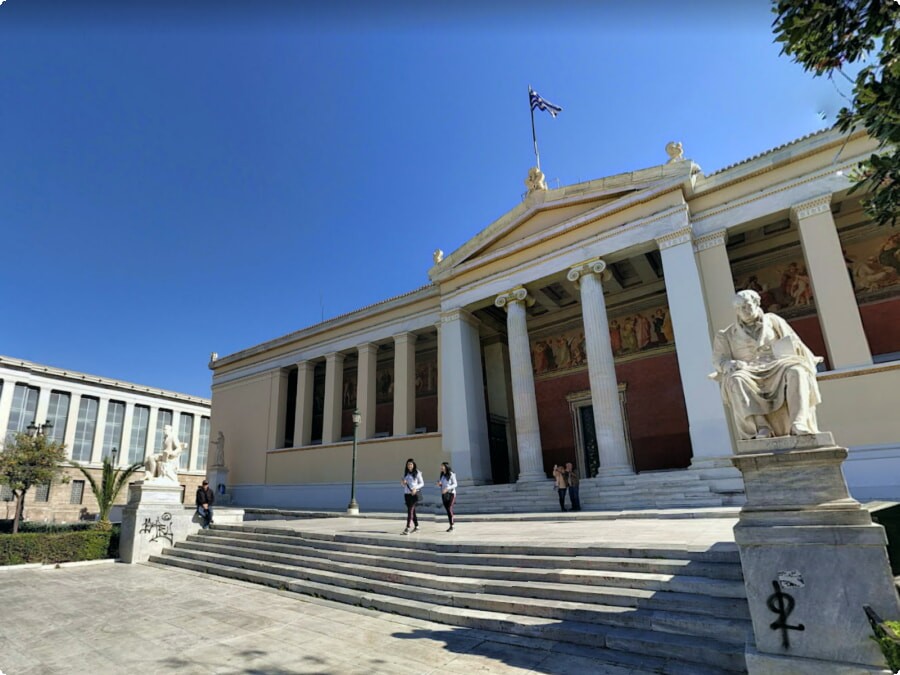
With one of the world's finest collections of Greek antiquities, this museum tells the story of the rise of Athens and of Greece. Its sculpture collection is unrivalled.
Located in Kifissia, not far from the centre of Athens, this museum has several collections, including sculptures, vases and smaller objects.
1. Archaeological Museum of Athens
The Archaeological Museum of Athens is the largest and finest archaeological museum in Greece, with an impressive collection of more than 11,000 exhibits ranging from prehistory to late antiquity. Despite the huge number of objects on display, the museum never felt crowded during our visit, thanks to its careful, well-thought-out layout. It is housed in a grand lemon-coloured neoclassical building and divided into a series of galleries and wings. Take your time over the ancient tools and finds in the Prehistoric Collection, then marvel at the evolution of Greek sculpture through the ages in the Sculpture Collection.
The museum's most famous treasures include the life-size bronze statue of Zeus or Poseidon from Cape Artemision, a gold helmet and the corroded bronze Antikythera mechanism, an ancient device used to calculate the movements of the sun, moon and planets. There are also many beautiful and elaborate gold masks, daggers, pieces of jewellery and other objects on display.
The Archaeological Museum of Athens was founded in 1829, the first museum established after the Greek War of Independence and liberation from Ottoman rule. It stands in Exarcheia, next to the Athens Polytechnic, and can be reached by taxi (5 minutes), by metro (10 minutes) or on foot in 25 minutes from Plaka and the Acropolis. It is open 7 days a week and ticket prices are reasonable. Combined tickets covering this museum, the Byzantine and Christian Museum and the Numismatic Museum are available at a single price and can be booked online. The Archaeological Museum is also included in most Athens multi-attraction passes, so it's worth comparing the different pass options.
You can't see all the sights of Greece in a day, or even in a week, but a hire car picked up at one of the country's airports will let you see as many new places as possible. For example, in Athens you can hire a car from 17 euros per day, and in Corfu from 16 euros per day.
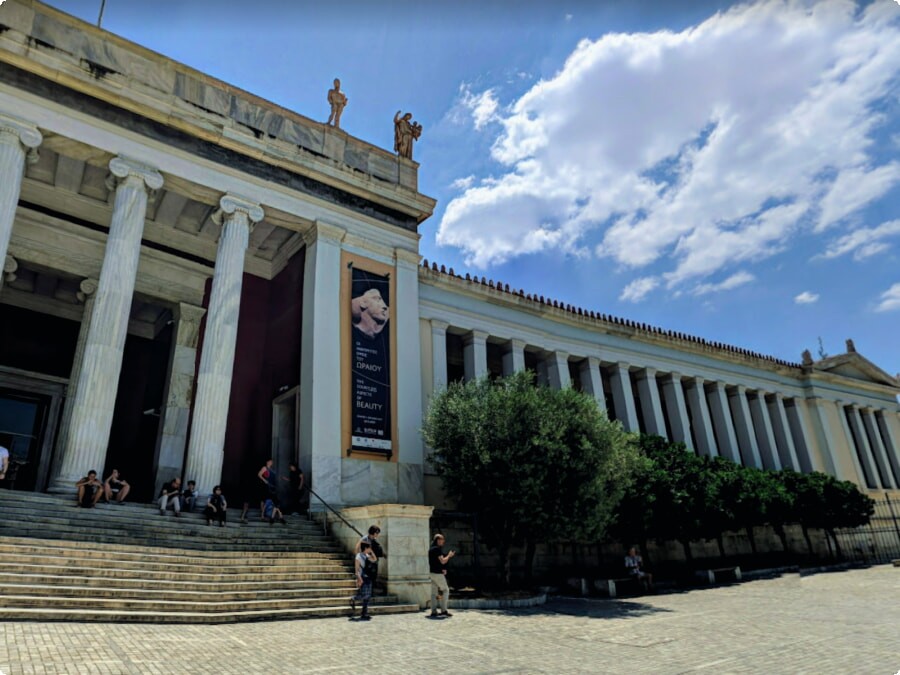
2. Byzantine & Christian Museum
Renovated in 2004, this magnificent museum holds one of the finest collections of Byzantine art in the world. Housed in the Villa Ilissia, it displays a dazzling array of icons, sculptures and frescoes of Christian art from the 3rd century AD to modern times. The exhibits are arranged in themed sections, so they are easy to follow.
Among the most interesting exhibits are Coptic priestly vestments, pottery and armour, as well as paintings, manuscripts and frescoes. With a collection of over 25,000 items, it is one of the top places in Greece for lovers of religious art, and it is also famous for its intricate mosaics and beautiful icons.
The Byzantine & Christian Museum is in the heart of Athens, close to many other attractions, including Kolonaki, the National Garden and the Museum of Cycladic Art. This makes it an ideal stop on a day of sightseeing in the Greek capital. It also features on many tours of the city's top museums and can be combined with other highlights such as the Acropolis, the Agora and Aristotle's Lyceum.
Whether you take a guided tour or simply wander round the exhibits on your own, this museum is an absolute must-see in Athens. If you visit on your own, allow a few hours to see everything, and plan your time so that you can take in all the exhibits in one go. To make the most of your visit, check ticket prices and opening times online, and book your tickets in advance to avoid any last-minute hassle.
3. National Archaeological Museum
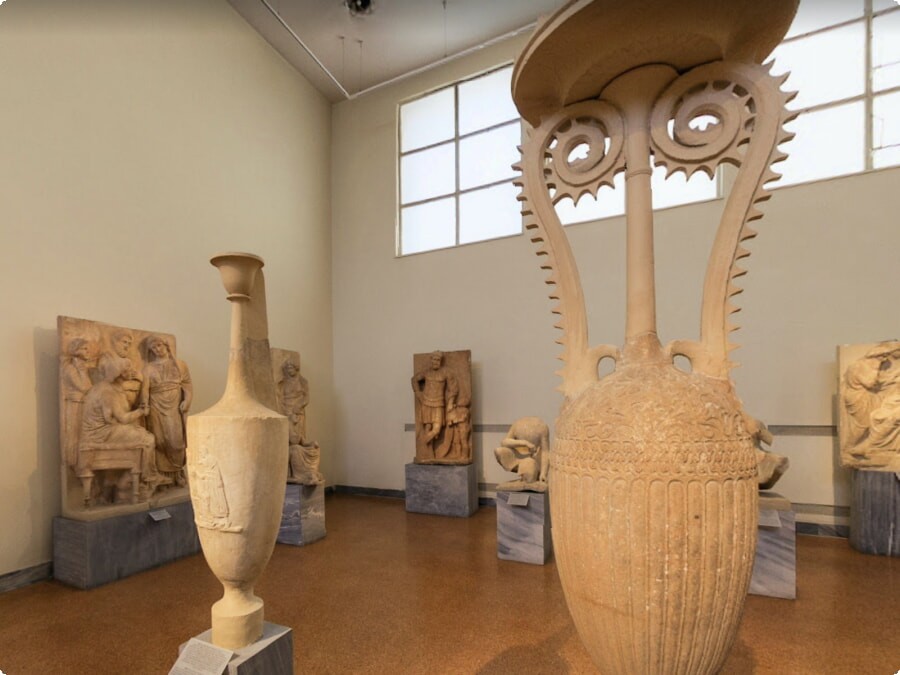
The National Archaeological Museum is a treasure house displaying the most famous finds from archaeological sites across Greece. It is also the main repository for antiquities collected by the Greek state, with a large library, a photographic archive and conservation laboratories.
Housed in an imposing neoclassical building, the museum is laid out so that its collections are easy to explore. It is the largest archaeological museum in Greece, with more than 11,000 exhibits.
It offers a panorama of ancient Greek civilisation from prehistory to late antiquity. One of the museum's main highlights is its collection of ancient bronzes, the largest in the world. Other standouts include the gold death mask of King Agamemnon, the helmet of Miltiades, the Athenian general who defeated the Persians at the Battle of Marathon, and a Mycenaean vase showing warriors marching off to war as their loved ones bid them farewell. There is also a gallery devoted to the magnificent treasures Schliemann found at Mycenae, and another to Santorini, with its enchanting wall paintings of boxers.
A visit to the National Archaeological Museum is like real-life time travel! You could easily spend several hours exploring the exhibits. At the entrance you can buy a discounted combined ticket that also covers the Epigraphic Museum, the Byzantine and Christian Museum and the Numismatic Museum. Don't miss it on your next trip to Athens. The museum is open every day from 9:30am to 5:30pm, except on 1 January, Easter Sunday and public holidays. Discounts are available for groups and students.
4. National Museum of Contemporary Art
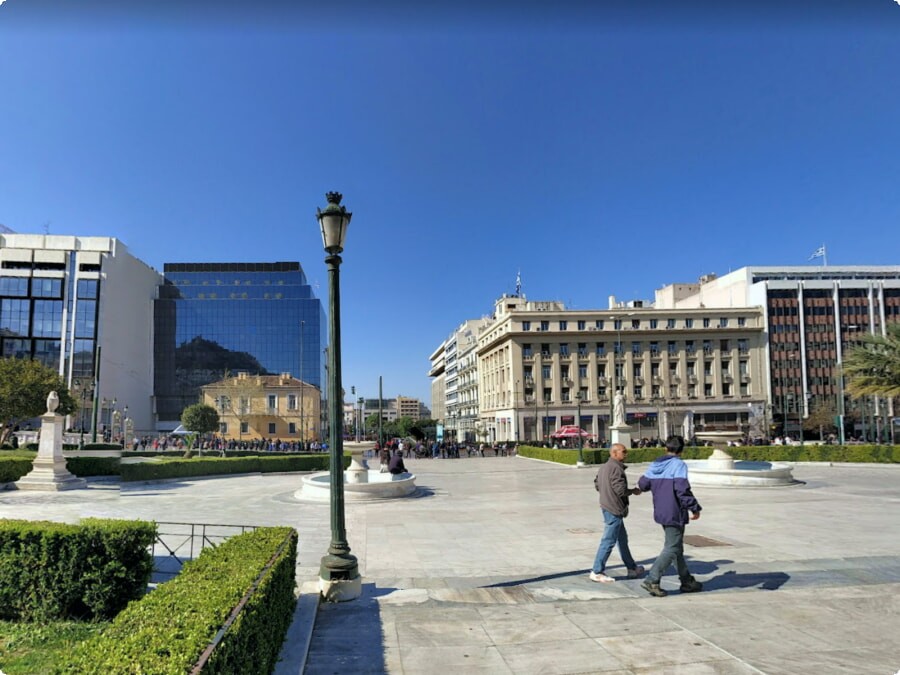
Founded in 2000, the National Museum of Contemporary Art (EMST) is one of the most important cultural institutions in Athens. Its collection includes paintings, installations, photographs and sculptures by Greek and international artists such as Vlassis Caniaris, Nikos Kessanlis, Shirin Neshat and Nan Goldin.
Its main exhibition space is the former Fix Brewery, a fine example of post-war industrial architecture in the Koukaki neighbourhood. EMST's collections are displayed throughout the building, which also houses classrooms, a library and a museum shop.
A visit here combines well with the city's great collections of antiquities. The National Archaeological Museum is famous for its extensive collection of bronzes, with more than 14,000 pieces, as well as ancient glass and pottery, figurines, cauldrons and weapons.
Another standout is the Numismatic Museum, which has one of the most extensive coin collections in the world. Its collection dates back to the 14th century BC and is sure to delight anyone interested in antiquity.
At the Acropolis Museum you'll also find numerous inscriptions and fragments of marble statues, including 36 of the original 115 panels of the Parthenon frieze, which capture moments of gods and mortals at ease, and reliefs such as the goddess Athena fastening her sandal.
During your trip to Athens, be sure to stop by this fascinating and varied museum. It's easy to see why it has quickly become a popular attraction, and together with the city's impressive collections of antiquities it offers an eye-opening glimpse into Greece's past and present. A special combined ticket lets you visit the Acropolis and the Byzantine and Christian and Numismatic museums for a single price!
5. National Museum of Greece
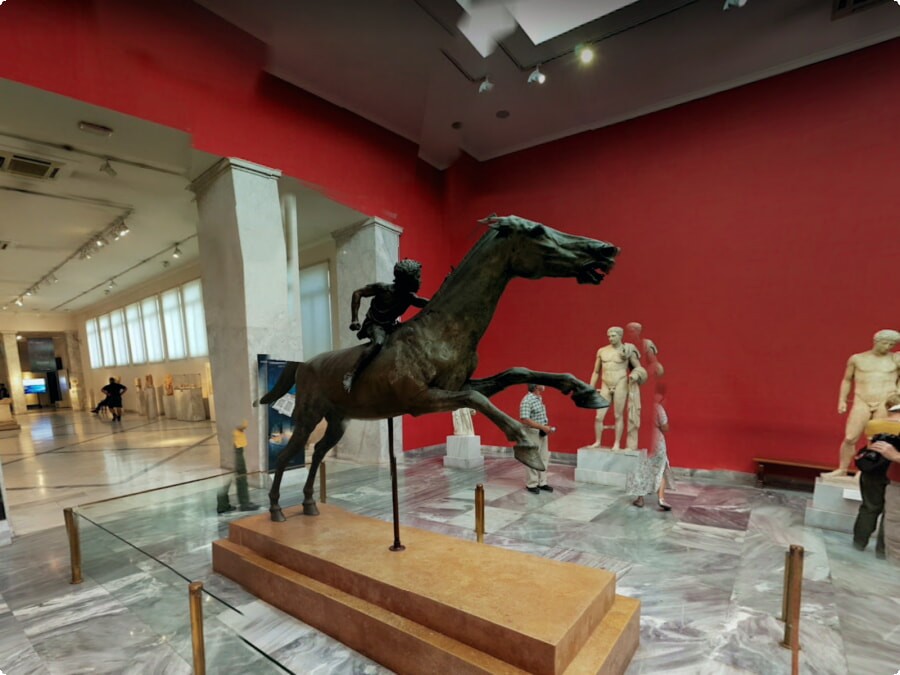
The National Archaeological Museum of Greece is the largest museum in the country and one of its most important, with an impressive collection of ancient Greek art. More than 11,000 exhibits from every corner of the Greek world and every period are gathered here, offering an extraordinary panorama of ancient civilisation from prehistory to late antiquity. Highlights include its famous bronzes and a remarkable collection of sculpture and metalwork, including works attributed to Praxiteles and other celebrated artists. Other standout pieces are the enigmatic Mask of Agamemnon and the Antikythera mechanism, an ancient calculating device often compared to a modern analogue computer. The museum also displays finds from the sanctuaries, temples and treasuries of ancient Greece, including some of its most renowned sites of divination and prophecy.
Built between 1866 and 1889, this imposing neoclassical building was originally designed to house the many finds from 19th-century excavations in Athens and the surrounding area. In the following years the collection grew with finds from all over Greece, and today it is regarded as one of the most comprehensive archaeological collections in Europe.
It is a true ‘museum of civilisations’, offering visitors a unique journey through the history of one of the oldest and most fascinating cultures in the world. With its everyday objects as well as works of art, this impressive collection makes the National Museum one of the most visited museums in Greece and a must-see for every traveller to Athens.
Other highlights worth seeking out include the superb Bronze Age frescoes from Akrotiri on Santorini, showing athletes, dancers and other scenes that seem to reach across the millennia and touch us today. And to see the beautiful Caryatids, the maiden figures that once supported the porch of the Erechtheion on the Acropolis, head to the nearby Acropolis Museum.