Notable Places in Stockholm
Stockholm is one of the most beautiful and photogenic cities in Europe. Here are some of the most notable places to visit in and around the city.
The Swedish capital has many museums and galleries, including some lesser-known ones that are well worth a visit. If you are keen on photography, for example, don't miss Fotografiska.
1. The Royal Palace
The Royal Palace is one of Stockholm's most prominent landmarks and a great way to explore the Swedish capital's rich history. The opulent Baroque building was completed in 1760, and its magnificent Italian Baroque facade makes it one of the most distinctive royal palaces in Europe.
The Palace is the official residence of the Swedish head of state, where the King carries out his constitutional, ceremonial and official duties. It is also the venue for most of the monarchy's official receptions, and it is open to visitors all year round.
It is easy to see why the Palace has been so popular with visitors ever since work on it began in 1754. It was designed by the master architect Nicodemus Tessin the Younger, who drew inspiration from the architecture of Rome. The enormous building has more than 600 rooms spread over 11 levels.
As you explore the palace's halls and state apartments, it is easy to lose yourself in the lavishly decorated rooms and sumptuous furnishings. The breakfast room, for example, was designed to resemble a German tavern and features a carved marble ceiling and a collection of gilded silver candlesticks from Germany.
A stroll through the palace gardens reveals rows of trees, fountains, cascades and hedge groves that give the grounds a secluded, romantic atmosphere. It is a wonderful place to relax and recharge after an exhilarating day of sightseeing in the city.
While you are at the Palace, be sure to visit Livrustkammaren (the Royal Armoury), a free museum that tells the story of the Swedish monarchy through armour and costume. You will find a large collection of crowns, swords of state and other artefacts handed down from generation to generation over four centuries.
Many travellers find that hiring a car is one of the best ways to enjoy everything Sweden has to offer. An economy car at Stockholm Airport costs about 18 euros per day, and at Malmö Airport about 19 euros per day.
2. Stockholm Cathedral (St Nicholas' Church)
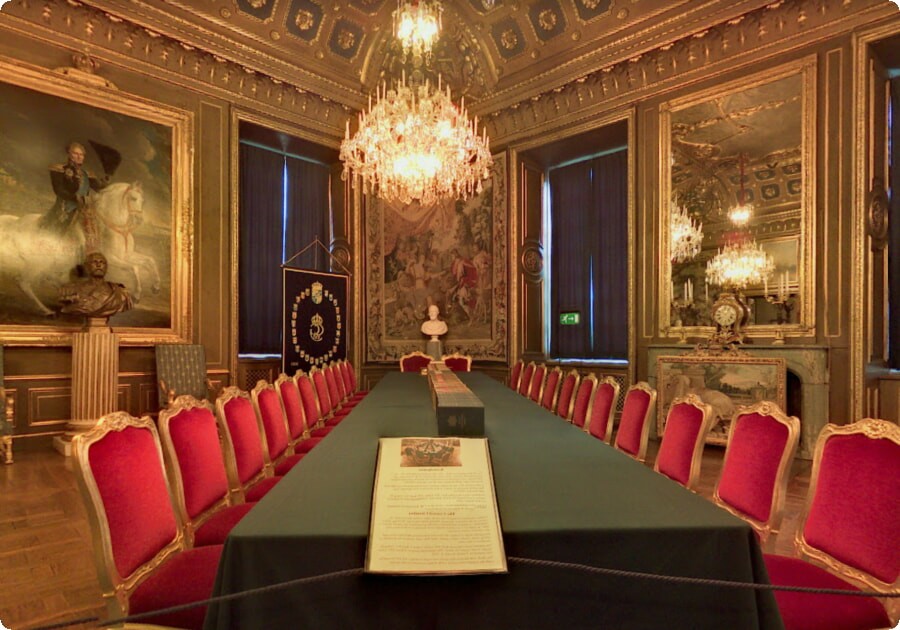
St Nicholas' Church, also known as Storkyrkan or Stockholm Cathedral (the parish of Stockholms domkyrkoförsamling), is the city's oldest church and dates back to 1200 AD. It stands in Gamla Stan, Stockholm's Old Town, on the site of a fishermen's chapel that burned down in 1306.
Inside the church are several important works of art. One of the most famous is the medieval sculpture group of St George and the Dragon, created by Bernt Notke of Lübeck in 1489. It is carved from oak, painted and partly gilded.
Another famous work in the cathedral is Vädersolstavlan, or the Sun Dog Painting. It depicts a phenomenon seen above Stockholm on 20 April 1535, when six ‘sun dogs’ appeared to converge over the city.
Besides these works of art, the cathedral contains other interesting historical pieces, including a silver altar from 1650, two royal pews - both carved by Burchard Precht - and a pulpit.
Interestingly, the church is also the burial place of Olaus Petri, a leading figure of the Protestant Reformation in Sweden. He died in the 16th century and lies beneath the pulpit.
The church has a special relationship with the Swedish royal family, which is why it has hosted many royal occasions, including coronations and weddings.
The cathedral also holds some of the most impressive artworks in Sweden. One of them is the large sculpture of St George and the Dragon, commissioned to commemorate the Battle of Brunkeberg in 1471. It is carved from oak, richly painted and partly gilded.
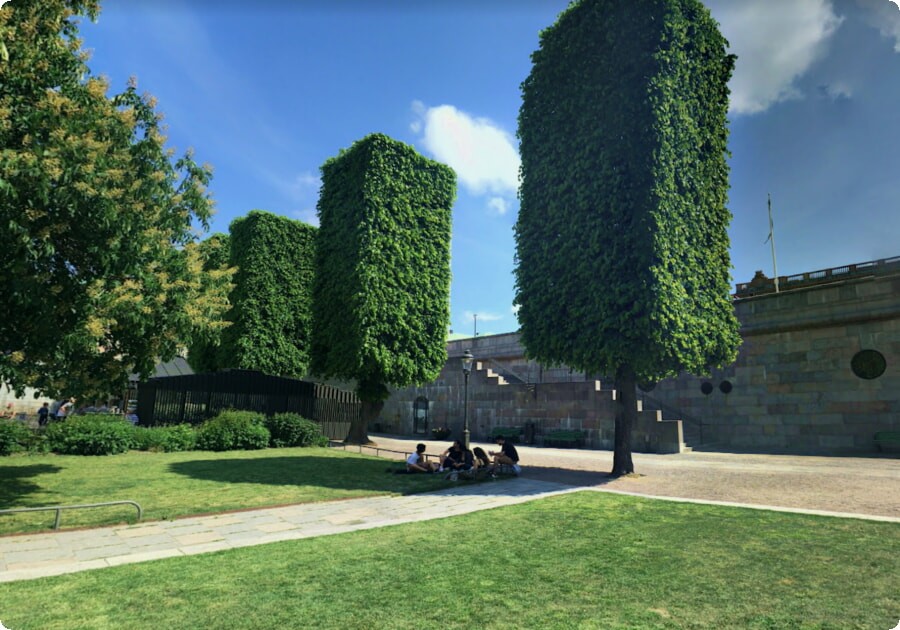
3. The Museum of Medieval Art
The Museum of Medieval Art is built around the remains of the 16th-century city walls and is a fascinating place to learn about life in medieval Sweden. Its extensive collection includes a wide range of artefacts, from relics to furniture.
The collection covers many subjects, but its main focus is medieval European art, and it includes medieval works that cannot be seen anywhere else in the world.
The European collection is diverse, with examples of Gothic sculpture, Romanesque architecture and Islamic art. There is also a large selection of illuminated manuscripts and stained-glass roundels.
In Sweden the Middle Ages were a time of religious and cultural change shaped by Christianity. Most of the collection dates from this period, with religious statues, crucifixes and stained-glass windows.
Another section of the museum is devoted to pre-Christian art, with carvings made as far back as the Stone Age, including images of lions, monsters and birds.
Swedish art began to depict more human figures in the Bronze Age, but in the Iron Age and the Viking era the emphasis shifted to animal forms. The zoomorphic shapes common on rune stones are a reminder of this period.
The Swedish History Museum (Historiska museet) in Stockholm is a huge institution covering Sweden from prehistory to the present day. You can see most of the exhibitions in a single visit, but you will get more out of it if you spread it over several days.
The museum is free to enter and has a vast range of exhibitions, from ancient civilisations to modern art. Among the highlights are the Viking exhibition and the treasury in the basement, arguably the finest collection of gold and silver treasures in Europe.
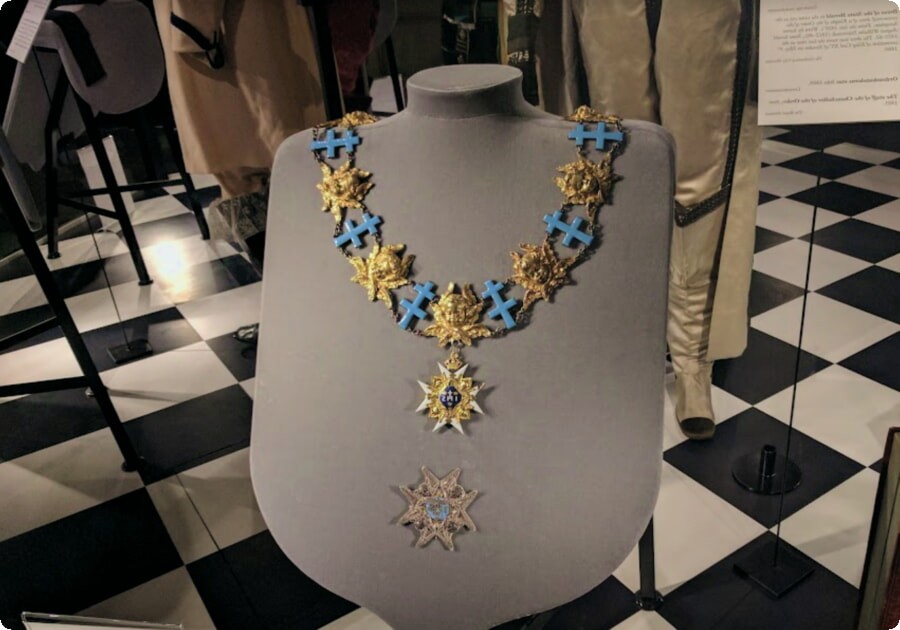
4. The Nordic Museum
The Nordic Museum is one of the most popular museums in Stockholm and a must for visitors to the city. It holds a vast collection devoted to Swedish culture and heritage. It is also great for children and adults alike, with a children's playhouse filled with objects from Swedish history.
The museum's extensive collections include clothing, toys, swords and other objects that portray life in both traditional and modern Sweden, as well as Swedish homes, furniture and art.
Founded in 1873 by Artur Hazelius, the Nordic Museum is a museum of cultural history, ethnography and folk art covering 500 years of Swedish history. Its impressive collection includes textiles, costumes, dolls' houses and other artefacts that illustrate the country's traditions, ways of life and culture.
It stands on the island of Djurgården in central Stockholm and was designed by the architect Isak Gustaf Clason. It was originally intended as a national monument to house the nation's material heritage.
Today the Nordic Museum occupies a large multi-storey building displaying much of Sweden's cultural heritage. It is a great way to learn more about Swedish history and culture and to see some of the country's most iconic works of art.
Visitors can see a variety of exhibitions on fashion and trends, jewellery, interior design, furniture, glass, porcelain and more. There is also a section devoted to the Sami people and a thought-provoking exhibition about the Arctic.
The museum was recently renovated with new galleries and a more interactive experience for visitors. Its new core exhibition, Northern Exposure, focuses on the art of the Nordic region and its influence on contemporary art. It was curated by a team of art historians including Klaus Ottmann, Jonathan Sajda and Robin Kaufman.
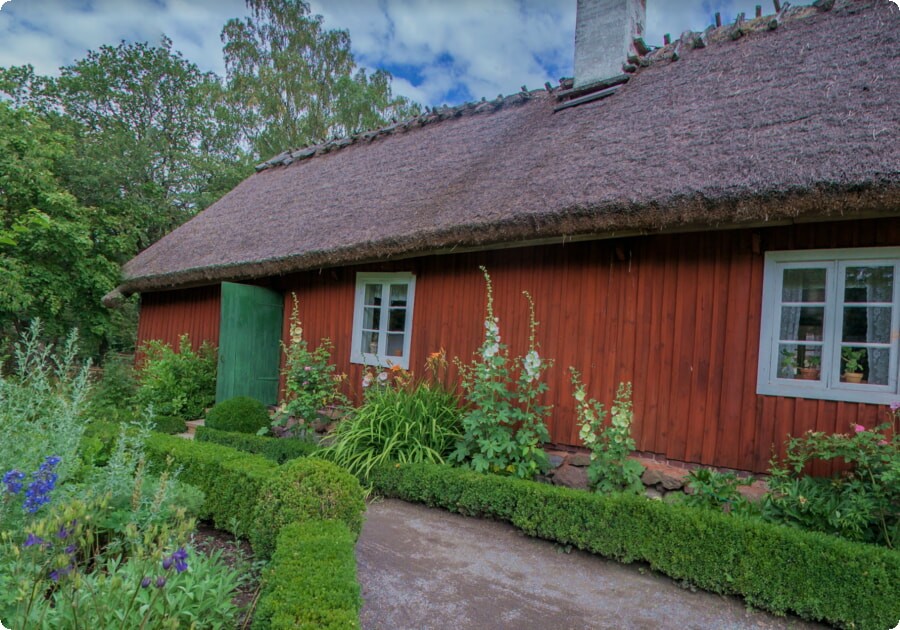
5. Skansen Open Air Museum
Located on the island of Djurgården, the Skansen Open Air Museum is the oldest open-air museum in the world and one of Stockholm's most popular attractions. Founded by Artur Hazelius in 1891, it shows what life was like before the Industrial Revolution and is a must for travellers who want an insight into Swedish culture and heritage.
The museum is made up of around 150 traditional buildings from all over Sweden, many of them dating from the 18th, 19th and early 20th centuries. They are laid out along paths lined with elm, oak and maple trees.
Each building is unique and shows how people lived in their part of the country. The museum also has a zoo with Scandinavian animals such as reindeer, elk and lynx.
Many events are held at Skansen, including summer sing-along evenings and folk music performances. They are great for families and a fun way to spend a day.
Visitors can also try a wide range of crafts and traditional activities. For example, you can dress up in traditional costume and join in folk dances or songs.
It is a fantastic place for the whole family and is sure to become one of your favourite Stockholm attractions. There is a zoo, horse rides and other activities for children to enjoy.
As well as its historic buildings, Skansen has a number of shops selling various handicrafts. The museum also hosts several events throughout the year, including the famous sing-along evenings, Allsång på Skansen, and a Christmas market.